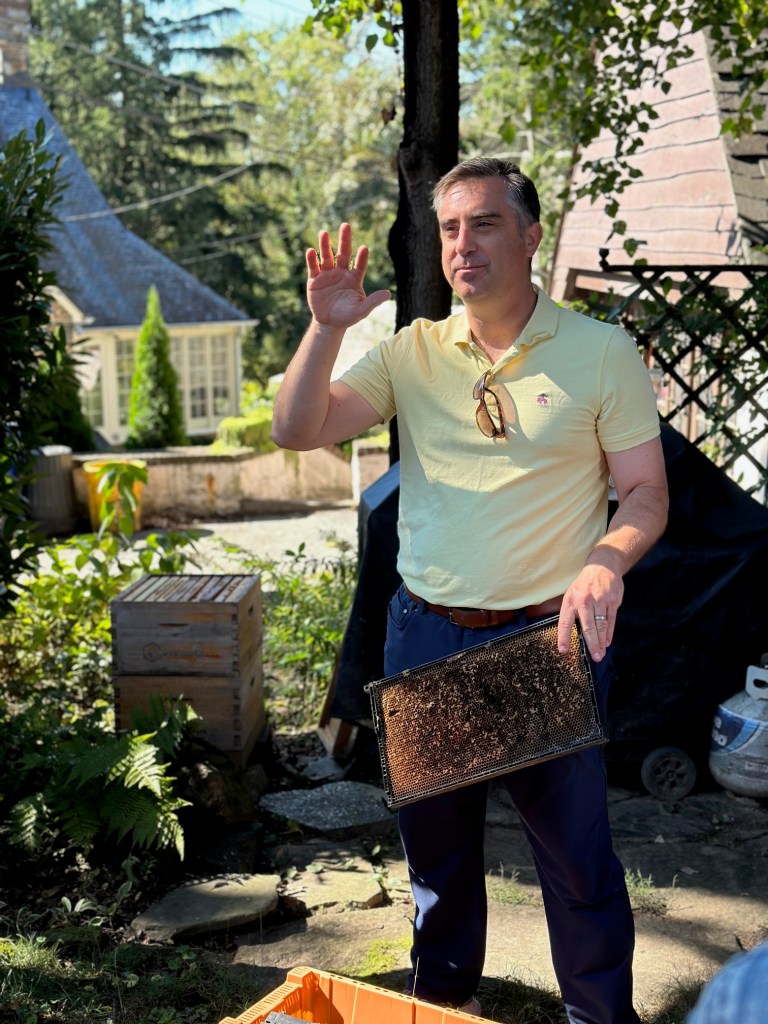
Members of the Homeland Garden Club visited longtime neighbor and friend, Tom Prevas, who welcomed us into his backyard apiary for an up-close look at his honeybee hives. Tom is an avid gardener and began beekeeping to support pollinators. Today, his bees not only pollinate his garden but also produce delicious honey that he harvests each season.

Why Bees Matter
Honeybees are essential pollinators, responsible for fertilizing more than one-third of the food we eat. In neighborhoods like Homeland, urban backyard hives help fill the gaps left by declining wild bee populations and dwindling natural habitats. By keeping bees, residents can support local biodiversity, strengthen pollination for home gardens, and even enjoy their own supply of honey.
Beekeeping also fosters awareness of the delicate balance between people, plants, and pollinators. Maintaining a hive encourages thoughtful planting of clover, flowering trees, and native plants that provide nectar and pollen throughout the year.
Beekeeping Basics
Tom walked through his hive setup, the tools and products he uses to maintain a healthy hive, and led a discussion about the benefits of beekeeping. If you are considering backyard beekeeping, Tom shared the following guidance and resources to get started:
Start with a Nuc (Nucleus Colony). Nucs are small honeybee colonies already centered on a queen bee. It gives your hive a head start because it already includes a laying queen, brood at different stages, and worker bees actively tending to the colony. It’s an established structure that helps the hive grow more quickly and adapt more successfully than starting with a package of loose bees.
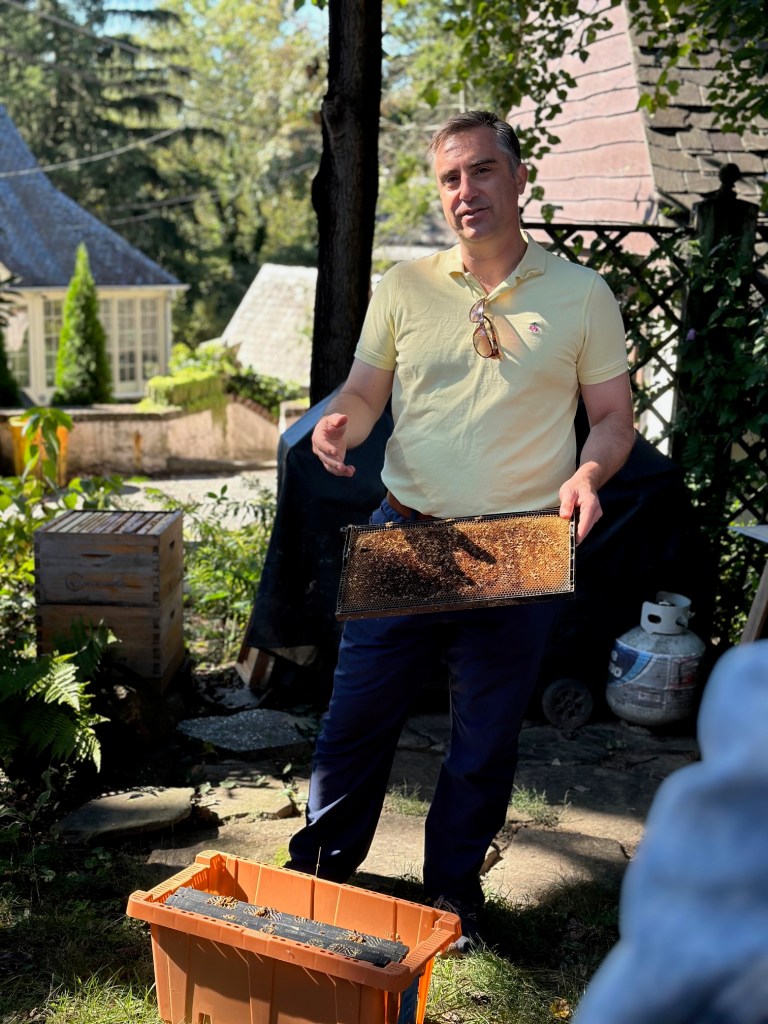
Choose a Hive Kit. For beginners, look for a 10-frame hive with one deep and one medium box, inner and outer covers, a bottom board, wax-coated foundations, and entrance reducers for seasonal weather changes. Kits with all of these components are widely available and reasonably priced (about $150), such as the BeeCastle 10-Frames Beehive Kit.
Ensure Proper Ventilation. An inner cover and telescoping hive lid can be used to allow excess moisture to escape and reduces condensation inside the hive, which keeps the colony healthy particularly during winter months. A common setup for beginners is to place the inner hive lid on top of the hive beneath the telescoping hive lid.
Provide Drinking Water and Forage. Provide clean water from a fountain or birdbath so bees can safely land and drink. Planting pollinator-friendly, native flowers, clover, and small ornamental trees near your hive can ease the continuous collection of nectar and pollen.
Manage Pests. Regular pest monitoring is essential to maintaining a strong, healthy hive. The biggest threats are Varroa mites, which weaken bees and spread disease; small hive beetles, whose larvae damage comb and ferment honey; and wax moths, which tunnel through comb in weaker colonies. Regular screening, treatment and pest control devices can support the bees in defending against these infestations.
Invest in Protective Gear. Beginners and even seasoned veterans use protective gear to prevent bee stings. Tom uses a full bee suit with a veil, gloves, and thick pants to avoid bee stings during inspections. As the bees get more accustomed to you, they tend to allow more inspections without equipment, but it only takes one sting in the wrong place to cause you to react and get the rest of them mad at you.
Use a Smoker to Calm Bees. A smoker can be a beekeeper’s best friend! It produces smoke that triggers the bees’ alarm pheromones, reducing their defensive behavior and encouraging them to retreat deeper into the hive. This makes it easier to inspect frames and harvest honey.
Harvest with a Honey Extractor. It’s time to harvest honey when most of your combs are covered with a thin layer of white wax called “capping”. Capped honey is heavy, won’t drip when the frame is removed, and has low moisture content for storage. To harvest, use an uncapping knife to gently shave off the wax layer, allowing honey to flow freely in the honey extractor. This 2-Frame Honey Extractor is excellent for a single backyard hive. After it is spun out, the honey is filtered, bottled, and ready to enjoy, while the empty frames can be returned to the hive for reuse.
Be sure to leave enough honey for the bees to survive winter—taking too much puts the colony at risk. Most beekeepers also avoid harvesting in the first year, since the bees need their energy to build out the comb structure. Tom typically harvests around the 4th of July and averages about five gallons of honey each year.
Prepare for the Winter. Protect the hive from cold temperatures and harsh winds by using an insulating wrap or “coat.” One popular option is the Bee Cozy Winter Hive Wrap, which slips easily over a standard 10-frame hive to provide an extra layer of warmth. Pair your insulated wrap with a moisture-wicking quilt or build upper ventilation in the frame to keep bees dry since condensation inside the hive can be more dangerous than the cold. Also, elevate your hive off the ground, place it away from direct wind, and give it plenty of honey stores to survive the winter months.
Don’t get Discouraged. Honeybee hives collapse for a variety of reasons. The queen may die or stop laying female eggs and not be replaced, and the bees can be harmed by pests, pesticides, or even other bees that rob the hive. Sometimes the hive dies off for reasons that aren’t clear. Tom has lost his hive on several occasions, each time for different causes. There are many tasks a beekeeper can undertake to try to prevent this, but for hobbyists who are not experts, there is only so much you can do. There is also a lot of conflicting information about best practices, and experts sometimes give you a sense that beekeeping is a monumental task that it is not worth trying. Tom’s mentality is not to let the perfect be the enemy of the good, do the best you can, learn, and enjoy the experience. If the hive does collapse, start again with a new nuc the following spring and try your best to help those bees succeed.
 Homeland Garden Club
Leave a comment