The Homeland Garden Club was thrilled to welcome Marvin Hayes, Executive Director of the Baltimore Compost Collective, for an engaging and informative presentation on composting and its powerful role in building healthier soil, gardens, and communities.
Marvin delivered a dynamic overview of how composting works, why it matters, and how the Baltimore Compost Collective is making composting accessible and impactful across the city. His enthusiasm and deep knowledge made even the science behind composting approachable and inspiring.
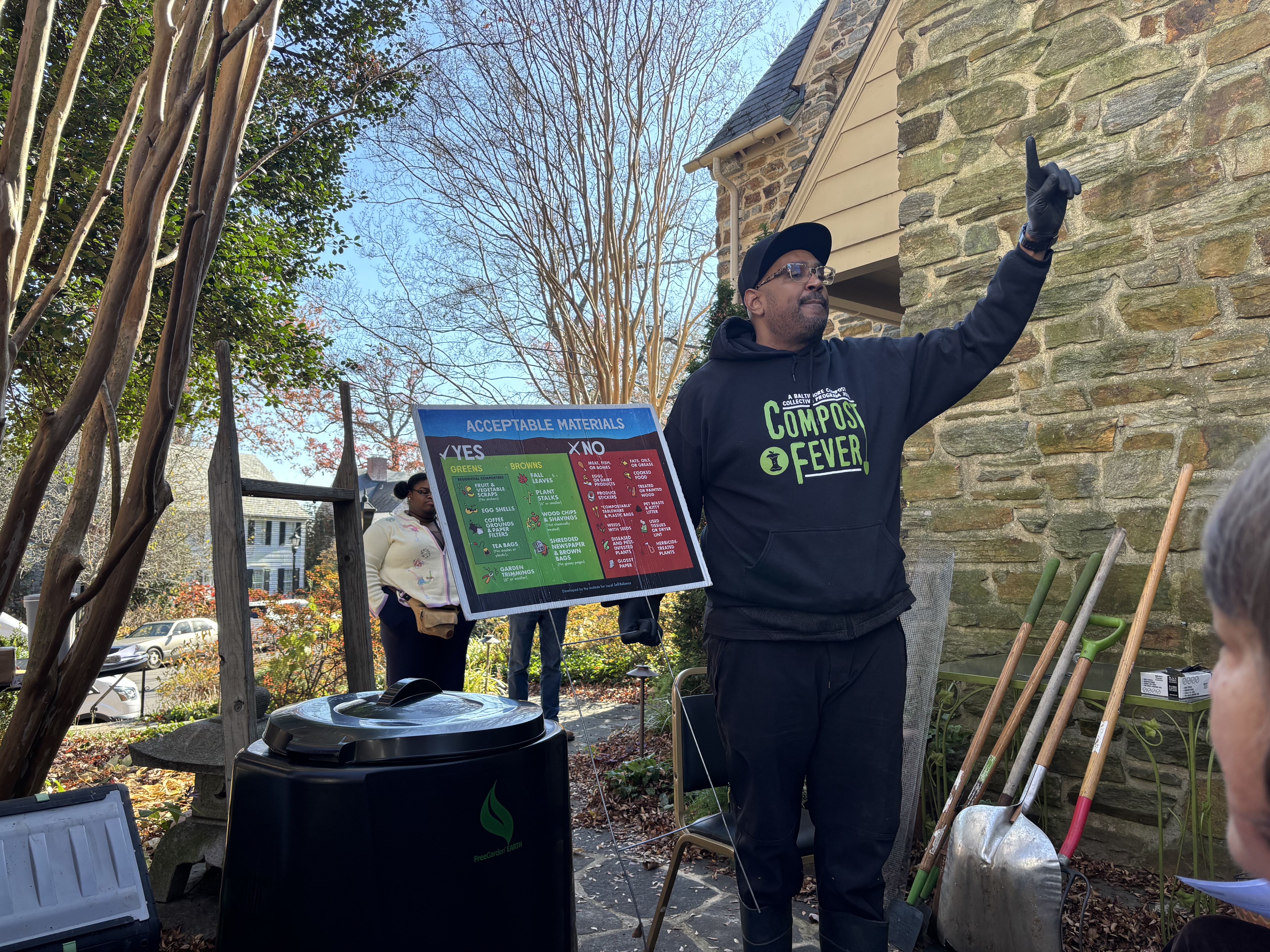
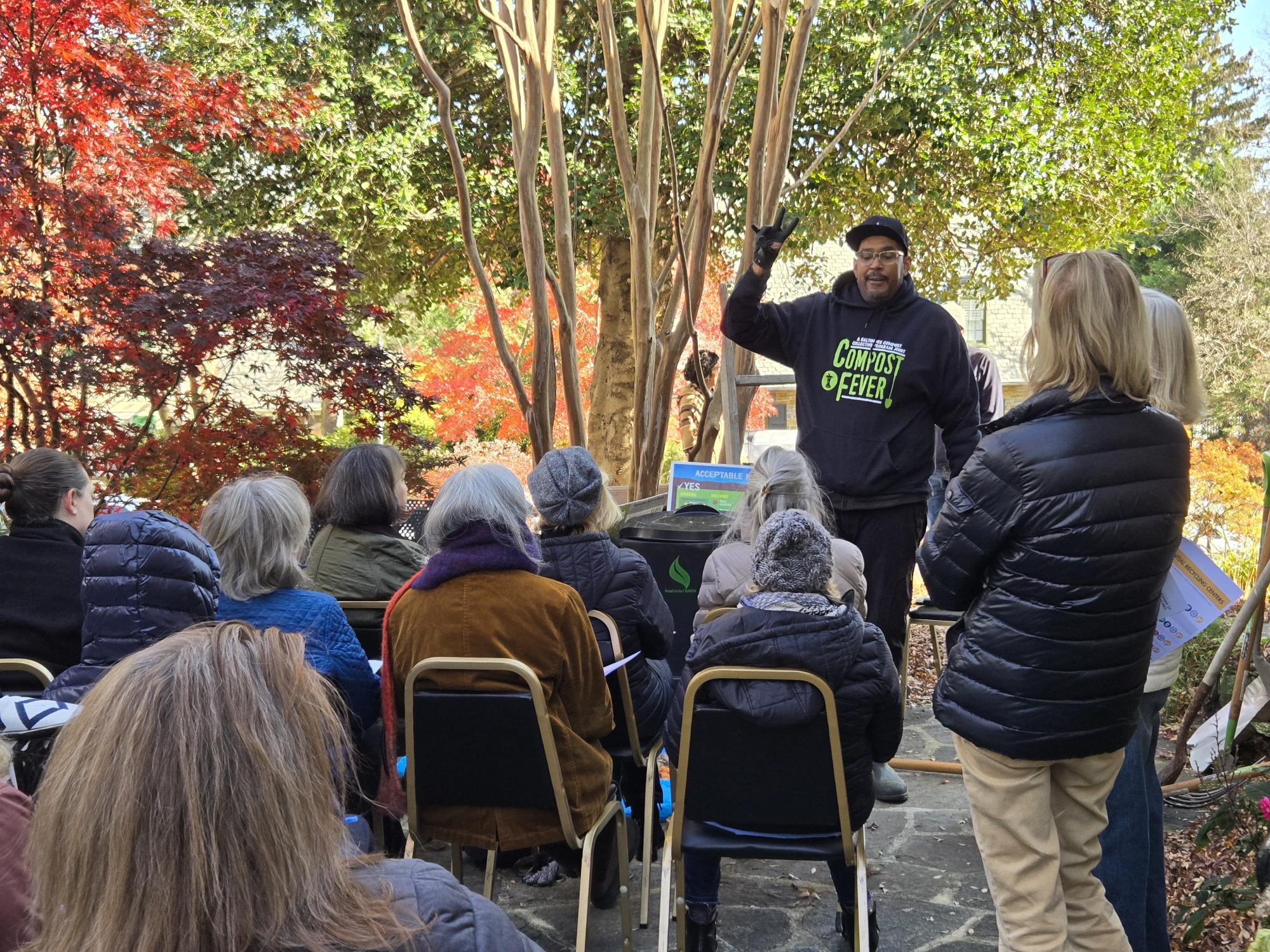
The Building Blocks of Compost
Marvin began by breaking down the four essential ingredients of successful compost:
Oxygen – Critical for supporting the microorganisms that break down organic matter.
Water – Ideally about 60% moisture, similar to a wrung-out sponge.
Carbon (“browns”) – Materials such as leaves, wood chips, straw, and paper products.
Nitrogen (“greens”) – Food scraps like fruit and vegetable peels, coffee grounds, and eggshells.
Understanding the balance between carbon and nitrogen, Marvin explained, is key to creating compost that decomposes efficiently without odors or pests.
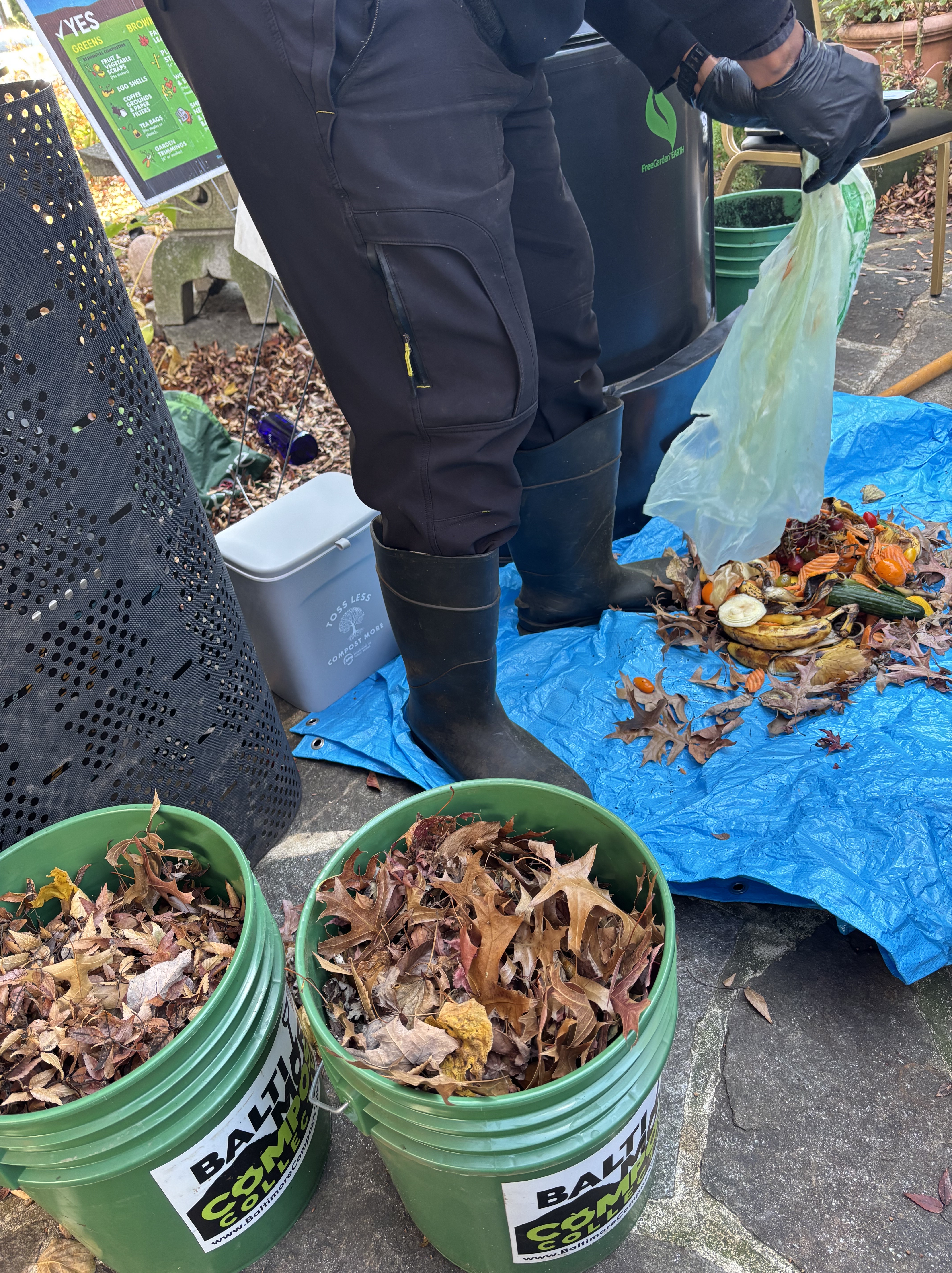
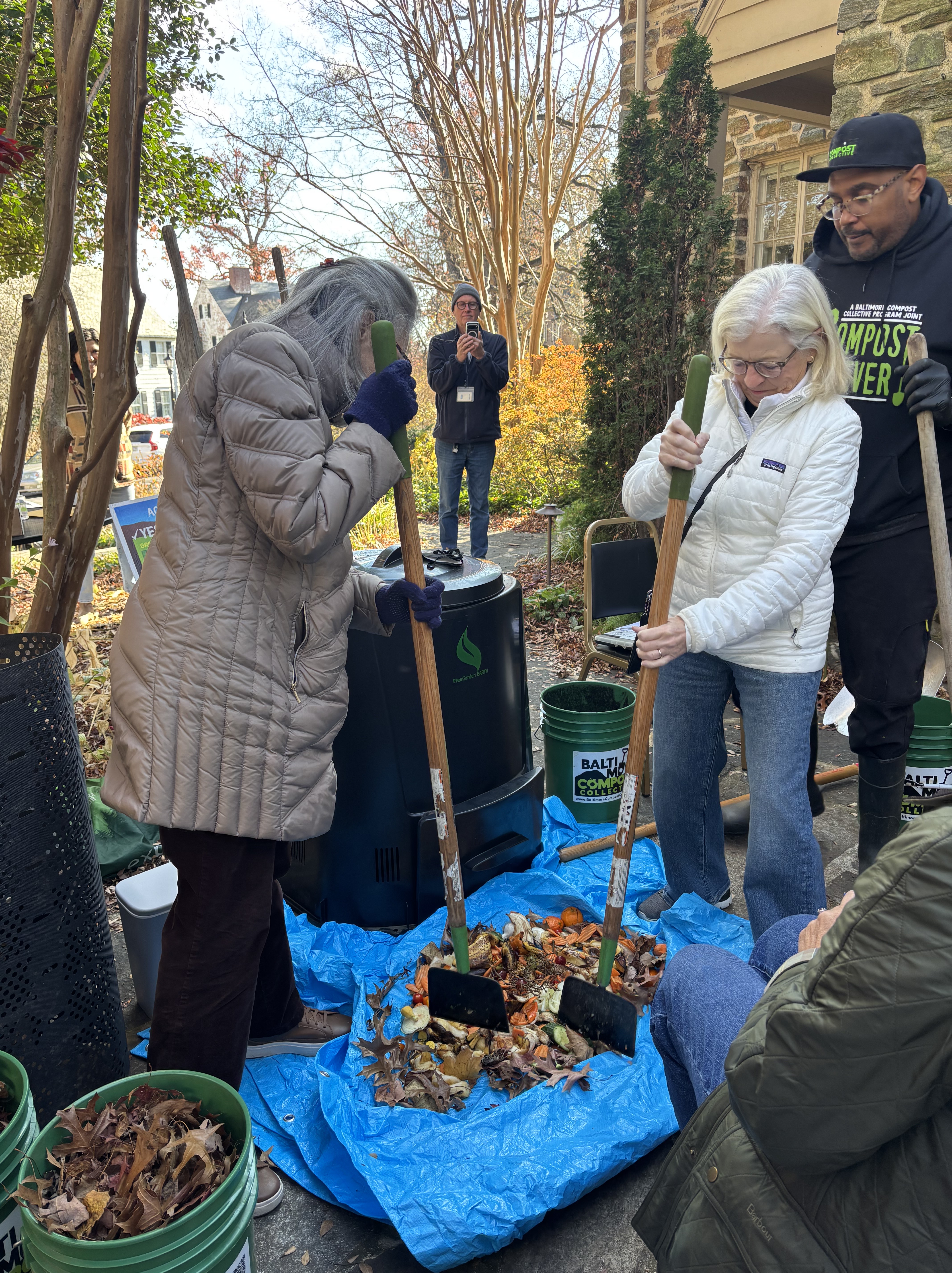
How the Baltimore Compost Collective Works
Marvin also shared how the Baltimore Compost Collective operates from collecting food scraps to transforming organic waste into nutrient-rich compost that is returned to the community. The Collective partners with residents, schools, businesses, and community organizations to divert waste from landfills while improving soil health and reducing greenhouse gas emissions.
Putting Composting into Practice
To help members get started right away, green garden composting bins and food-scrap containers were distributed free of charge to attendees. This hands-on component reinforced Marvin’s message that composting doesn’t have to be complicated and that small, consistent steps can make a big difference.
Growing a More Sustainable Homeland
This meeting perfectly aligned with the Garden Club’s commitment to sustainability, soil health, and environmental stewardship. Many members left energized to begin or refine their composting practices at home, knowing they are contributing to a healthier neighborhood and a more resilient Baltimore.
We are deeply grateful to Marvin Hayes for sharing his expertise and to the Baltimore Compost Collective for the vital work they do every day. If you missed this meeting or want to learn more, we encourage you to explore composting resources and consider how food waste can become one of your garden’s greatest assets.
 Homeland Garden Club
Leave a comment